The Ghats Terroir:
How Monsoon Mists and Red Soil Shape Southern Indian Botanicals
Moving beyond industrial commodities to celebrate the microclimates, soil stress, and ancestral cures of the Western Ghats.
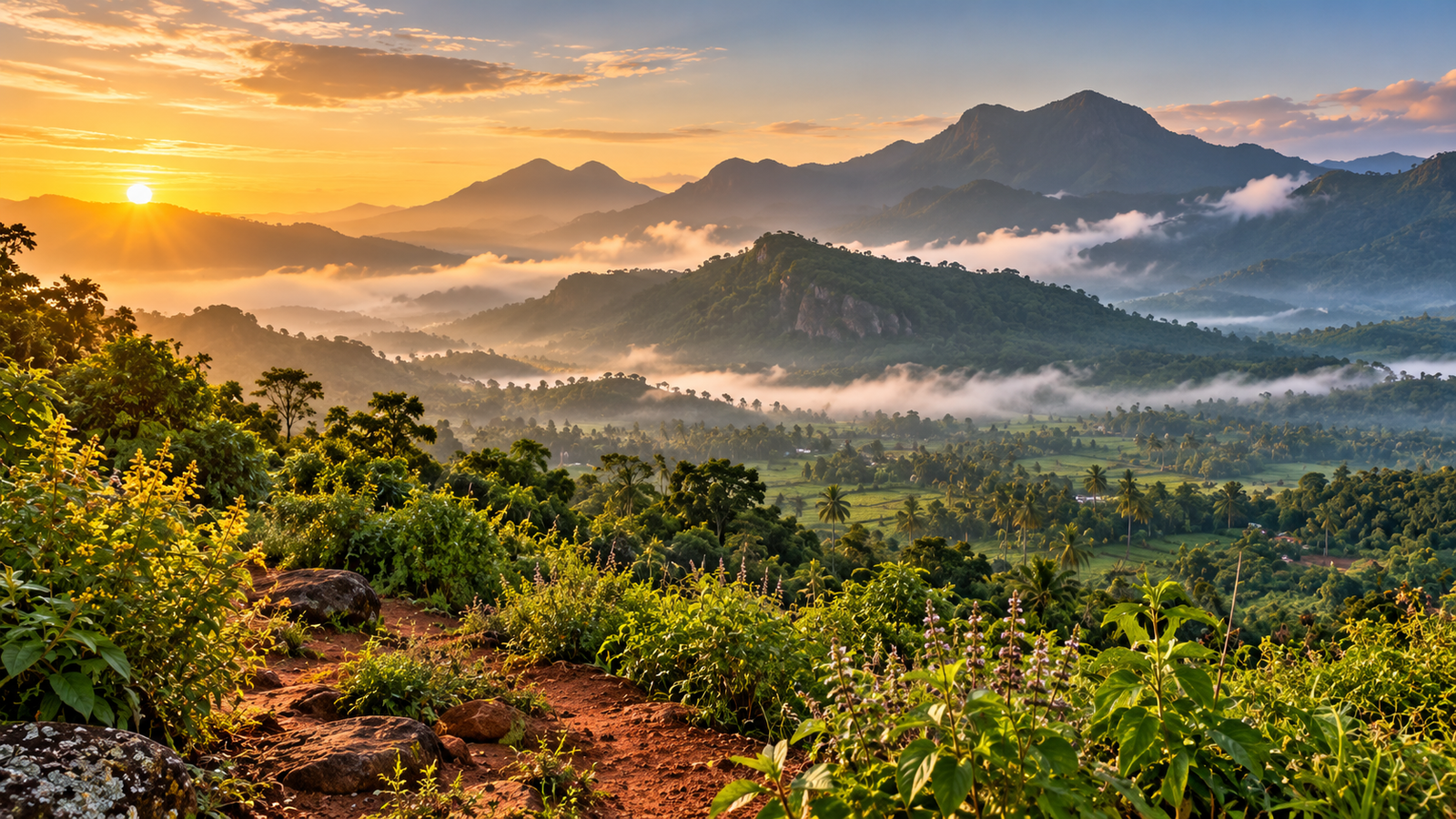
The French concept of terroir—the premise that soil chemistry, microclimate, sun exposure, and topography permanently imprint an agricultural harvest—is universally accepted in fine wine and single-estate Darjeeling teas. Yet when it comes to medicinal herbs and botanicals, global commerce has historically treated them as undifferentiated commodities. Dried ginger was simply dried ginger; holy basil was simply tulsi.
This industrial indifference erases an ecological reality: altitude, soil stress, and rainfall patterns dictate the concentration of therapeutic essential oils and secondary metabolites.
The Southern Western Ghats of India—framing the fertile plains of Tamil Nadu around Pollachi—represent one of the eight most biologically diverse hotspots on Earth. Here, where the Arabian Sea monsoons collide with ancient granitic peaks, botanicals do not merely grow; they develop distinctive character.
The Architecture of Flavor: Three Signatures
When botanicals struggle against rocky slopes and absorb tropical sun, their aromatic footprint deepens. Three plants showcase the character of this landscape:
1. Wild Vetiver (Chrysopogon zizanioides)
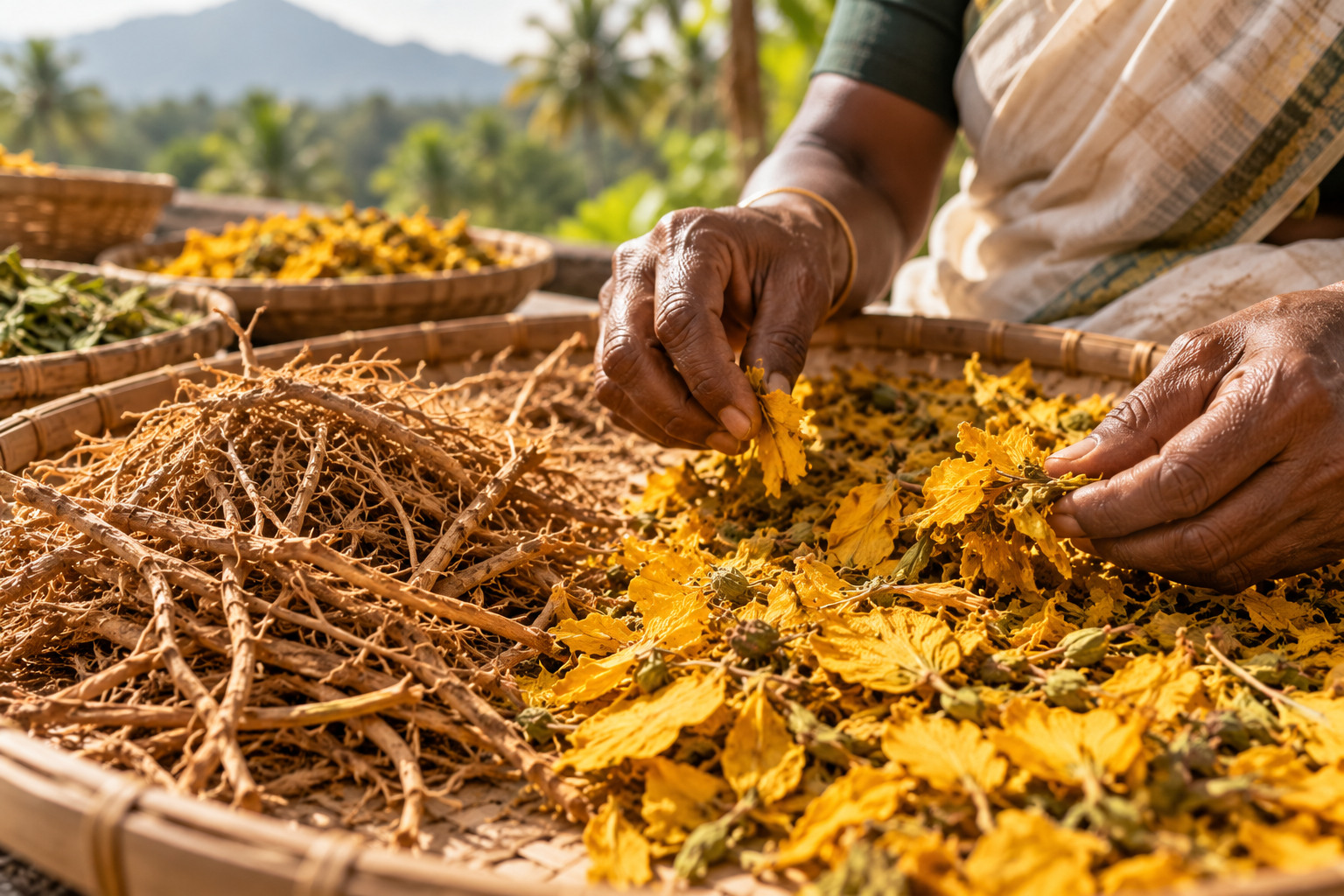
In the rocky alluvial soils at the foothills of the Anamalai range, Vetiver develops deep, fibrous root clusters that dig meters into the earth to anchor the soil. This hydraulic labor produces an aromatic signature unlike farmed varieties: damp loam, cooling camphor, clean smoke, and a subtle sweetness that anchors deep infusions like DEEP FLOW.
2. Sun-Cured Avarampoo (Senna auriculata)
Known historically as the golden jewel of the Deccan dry belt, these delicate yellow flowers bloom intensely under dry heat. Hand-gathered in small parcels, they are dried slowly under shaded canopy cloths rather than in industrial drying tunnels. This slow cure preserves golden flavonoid pigments, resulting in an amber liquor with sweet, honeyed undertones and skin-calming properties celebrated in ancient Siddha texts.
3. Sukku (Sun-Cured Mountain Ginger)
Industrial ginger is typically forced through chemical drying to speed shelf access. Heritage Sukku, harvested from the rainforest fringes of the Ghats, is dried in natural sunlight, shifting its chemical balance from raw gingerol to warming shogaol. When boiled into SUKKU KASHAYAM, the decoction releases a warming resonance that opens nasal passages and fortifies the body against damp chill.
The Discipline of the Southern Harvest
True botanical luxury does not rely on spray-on natural flavors or synthetic essences. It depends entirely on whether the plant spent its life struggling against wind, soaking in rich red soil, and absorbing tropical sun.
“Every botanical earns its place. Rooted in India’s extraordinary botanical knowledge, ingredients, and infusion traditions — interpreted with an international outlook.”
By taking whole botanicals from the micro-farms and wild tracts of Pollachi and processing them without chemical intervention, INDIAN TISANE™ introduces the global palate to southern India’s true botanical identity: visible, terroir-driven, and made to travel.